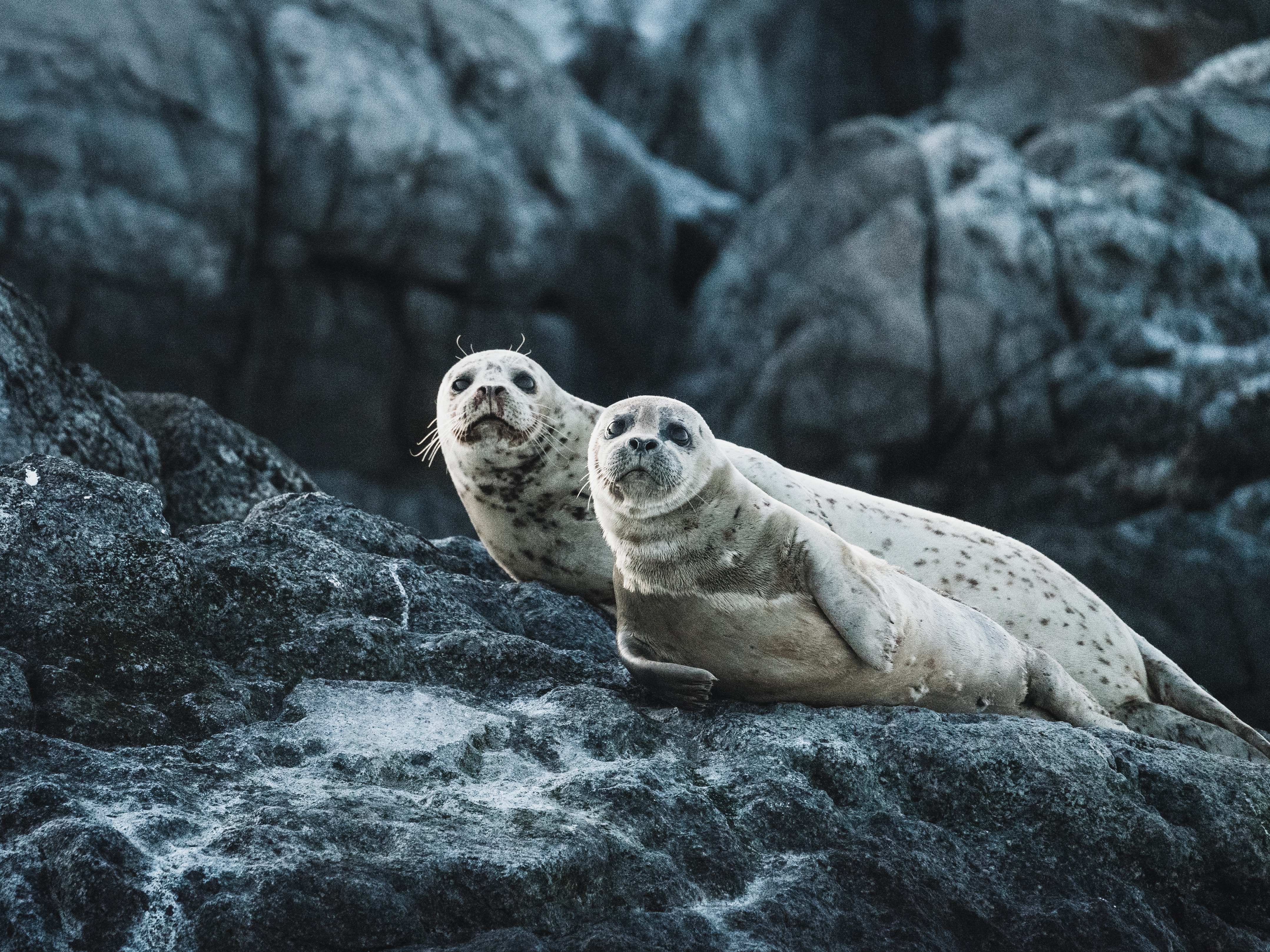
A common misconception in the world of aquatic animals is the difference between sea lions and seals. The two are often used interchangeably as if they were the same species. Yet, they are in fact two very different species whose habitats are located far from each other.
To properly understand the difference between the two, we must first understand how they evolved. Sea lions and seals are a prime example of convergent evolution, when species occupy similar ecological niches and therefore must adapt to the same environmental pressures. As a result, these adaptations exhibit similar physical traits such as flippers even though there is no shared ancestor.
Identifying a common ancestor can be very useful in the world of ecology. Scientists can determine common ancestors through DNA, skeletal systems, and embryos. By determining common ancestors’ scientists are able to build phylogenetic trees and trace the species’ evolution. Although it seems unlikely, many vastly different species share a common ancestor, like humans and whales, while species that seem similar, like seals and sea lions do not. Seals’ and Sea lions’ ancestors were both terrestrial and evolved traits to live in the ocean.
Seals and sea lions may seem similar at first glance, but they also have many traits that set them apart. Seals are noticeably smaller than sea lions, making them more adept in the ocean than on land. Seal’s flippers cannot rotate forcing them to belly crawl once on land to move around. Sea lions, on the other hand, have rotational flippers allowing them to “walk” around on land without having to belly scoot. For this reason, sea lions are often used in shows at SeaWorld and aquariums making it easier for them to perform tricks. When examining the head of both animals closely one may notice seals don’t have ears flaps, which makes their ear holes almost impossible to see against their grey bodies. Although both sea lions and seals communicate through vocalizations, sea lions tend to be louder and produce bark sounds while seals are quieter and communicate through moans and growls.
Don’t be fooled, seals and sea lions share common characteristics and habitats, but they are two very different species.
References:
1. https://oceanservice.noaa.gov
2. https://www.nps.gov
3. https://www.ifaw.org